
Welcome to Think Counselling
In-person Counselling in Banbury and Online Sessions Across the UK and Europe
Hello, I’m Sarah. I'm an integrative counsellor working with adults and young people aged 16+, both in person and online.
Sometimes life can feel overwhelming, confusing, or difficult to navigate. I provide a space to talk openly, feel genuinely heard, and begin making sense of what you are experiencing in a way that feels right for you.
A collaborative approach
The counsellor I am today has been shaped by both lived life and professional experience. My own life experience has given me an understanding of some of the emotional challenges that can come with change, uncertainty, relationships, identity, loss and different stages of life.
Before becoming a qualified integrative counsellor, I worked in a variety of roles supporting and working alongside people from different backgrounds and experiences. This gave me insight into the pressures we often carry and the different ways we learn to cope and adapt through difficult experiences.
I understand that many of the patterns we repeat, the ways we respond and how we feel about ourselves develop for understandable reasons and can remain with us even when they no longer feel helpful in the present.
In my experience, counselling works best as a collaborative process where you feel accepted as you are, without judgement or pressure to fit a particular mould.
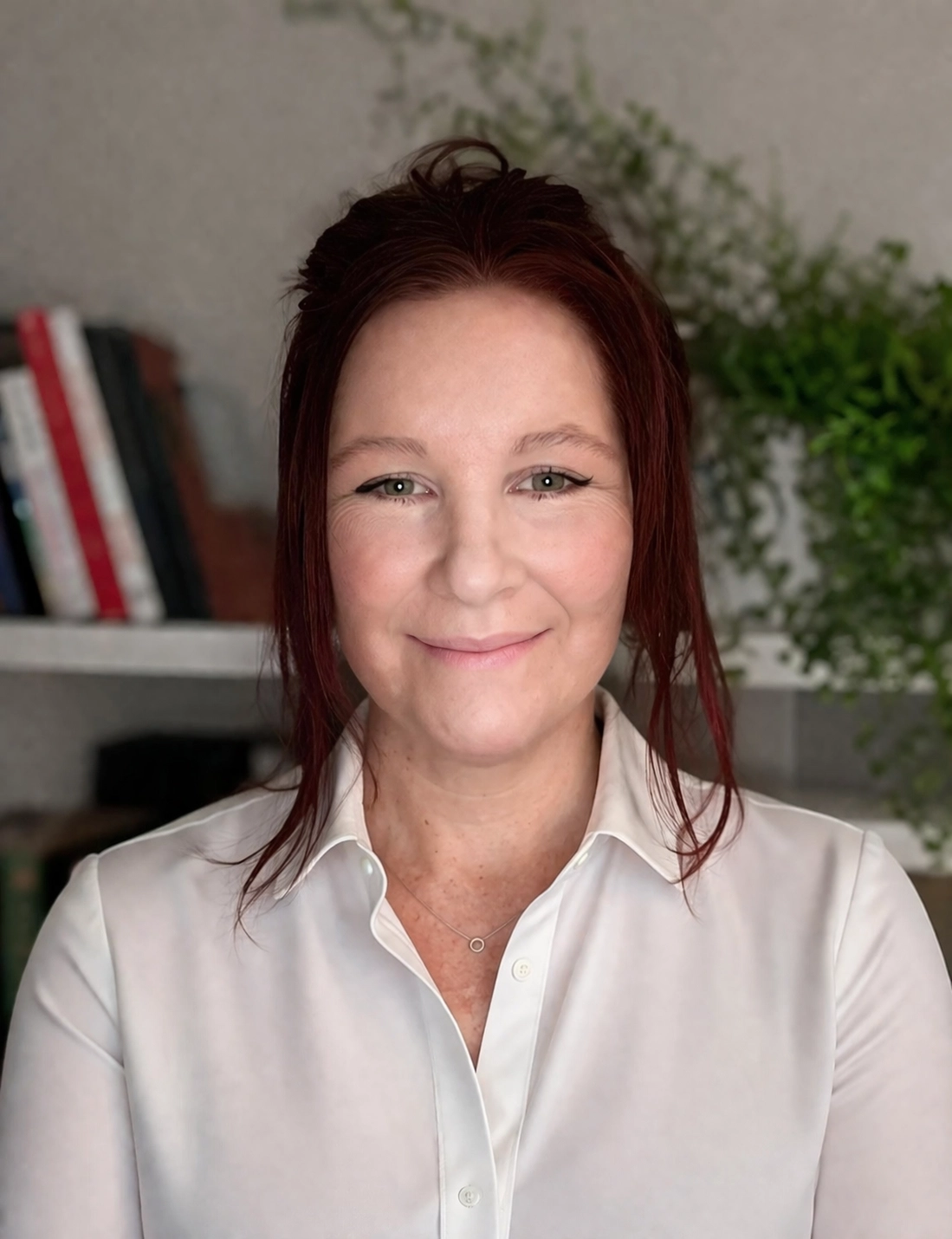
Sarah Roe
Counsellor MNCPS (Acc.)
NCPS Accredited Registrant (NCPS2983)
Professional Practice
I am an accredited member of the National Counselling and Psychotherapy Society (NCPS2983) and work in line with their ethical framework to support safe and professional counselling practice.
I hold professional insurance, an enhanced DBS certificate, and I am registered with the Information Commissioner’s Office (ICO).
I offer in-person counselling in Banbury, conveniently located for Brackley, Bicester, Towcester, Daventry and the surrounding areas, as well as online counselling across the UK and Europe.
Tailored Therapeutic Support
I draw from a range of therapeutic approaches, adapting how we work to suit you as an individual rather than expecting the same approach to work for everyone. I have experience supporting neurodivergent people, as well as those experiencing self-harm, suicidal thoughts, anxiety, low mood, overwhelm, emotional distress and feelings of disconnection.
A Different Space to Talk
Sometimes it can feel difficult to speak openly in everyday life when we are worried about judgement, pressure, expectations, or the impact our feelings may have on others. Counselling offers a confidential space that is separate from your personal relationships, where you can talk openly and feel genuinely heard.
Counselling Isn’t Always Easy
Counselling is not always about finding quick answers or feeling better straight away. At times, talking about difficult experiences or emotions can feel challenging or emotionally tiring.
My role is to support you through this process with compassion and without judgement or pressure, in a way that feels manageable for you.
What issues can counselling help with?
People come to me for help with a wide range of issues. Here are some of the difficulties that can be supported through counselling:
Anxiety
Life changes and uncertainty
Self-harm and suicidal thoughts
Neurodiversity
Confidence and self-esteem
Trauma
Emotional distress
Pet Loss
Abuse
Identity and sexuality
Addiction
Grief, loss and bereavement
Overwhelm and stress
Relationship difficulties
Workplace stress and burnout
Student Counselling
Feeling disconnected or stuck
Family, education and work pressures
My location
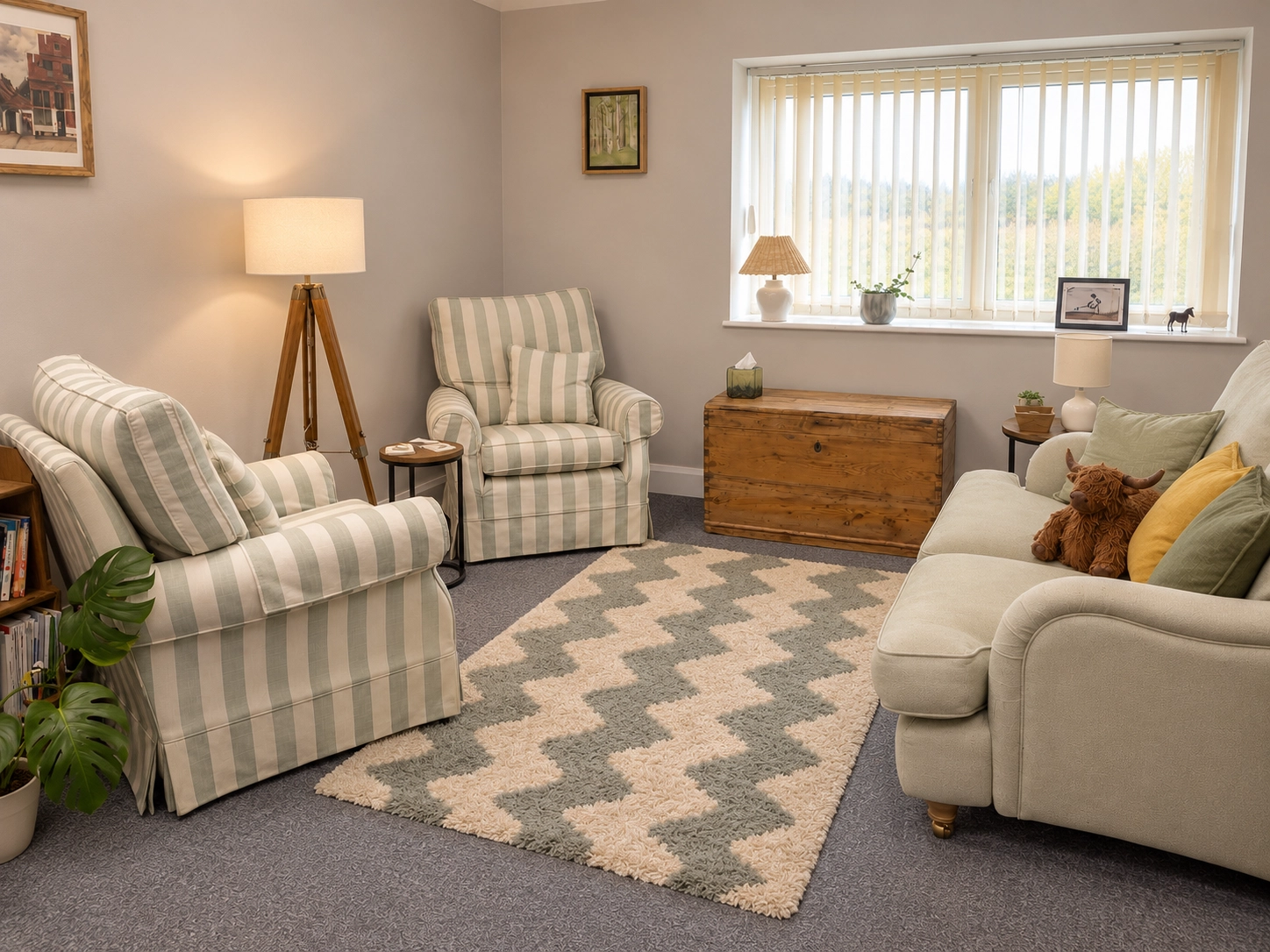
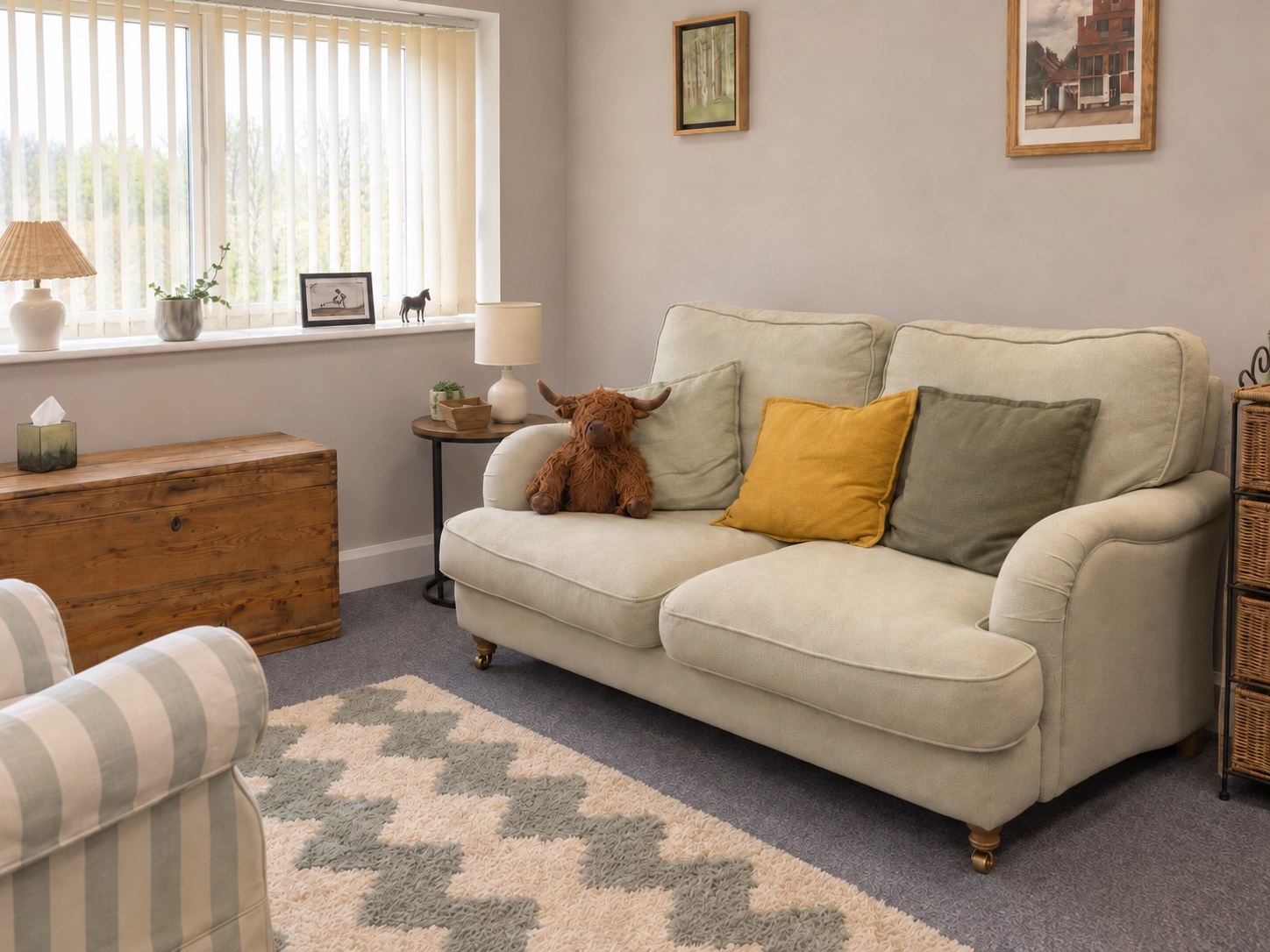
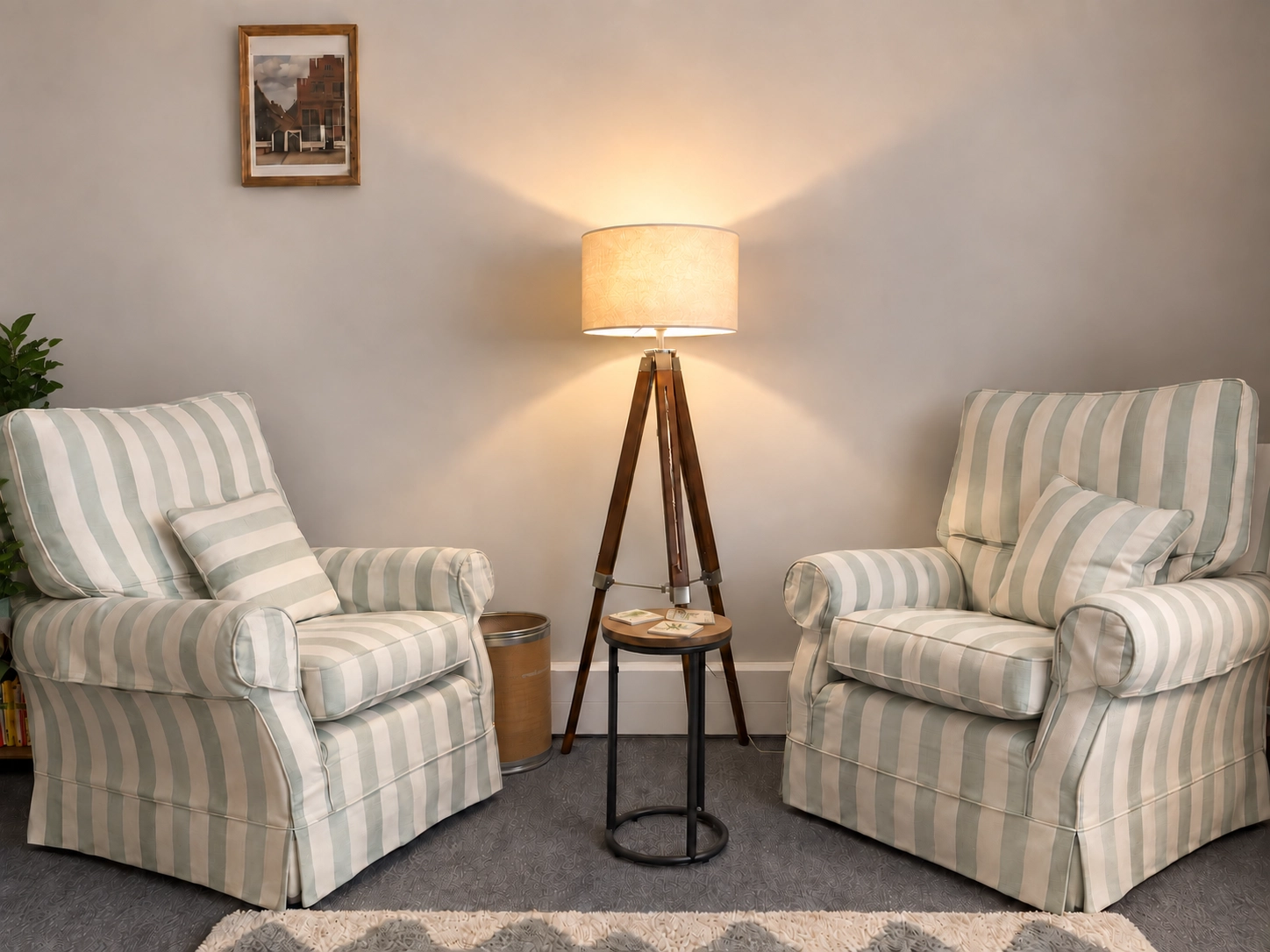
I offer in-person counselling in Banbury from a comfortable counselling room at Bloxham Mill, just 11 minutes from Banbury town centre.
There is free on-site parking, step-free access and accessible toilet facilities. Reception is available during office hours, and there is also a quieter private rear entrance if you would prefer to avoid a shared space or would find this more comfortable for sensory reasons.
I also offer online counselling, allowing you to attend from your own space wherever you are in the UK or Europe.
We can explore together whether online or in-person counselling feels most appropriate for you.
Fees & availability
Counselling sessions are 50 minutes and cost £55.
I also offer some reduced-fee counselling sessions where the full cost would otherwise make counselling difficult to access. Please feel free to enquire about current availability.
I offer a free 20-minute introductory chat to help you decide whether my approach to counselling feels right for you. If not, I will do my best to help you find a counsellor or service that may feel more suitable.
If you need to cancel or rearrange a counselling session, I ask for at least 24 hours’ notice. Sessions cancelled with less notice will normally still need to be paid for.
Get in touch
Feel free to get in touch if you have any questions about how counselling works, or if you would like to arrange a free, no-obligation 20-minute introductory chat. This gives us an opportunity to talk about what has brought you to counselling, whether therapy may feel helpful for you, and whether my way of working feels like the right fit.
You are welcome to contact me using the email, enquiry form on this website, or by phone on 07846613528 if you would prefer to leave a message or speak briefly first. I am happy to answer any questions you may have before arranging an initial session.
If you have any mobility, sensory or other access needs, please feel free to mention these when you contact me so that we can discuss what would help.
All enquiries are treated as strictly confidential and are usually responded to within 24 hours.
Some frequently asked questions
What's the difference between counselling and psychotherapy?
You may see terms such as counselling, therapy and psychotherapy used by different therapists. In reality, they are all forms of talking therapy, and there is often very little difference between them. Sometimes counselling is described as being for less complex or for short-term difficulties, while therapy or psychotherapy is described as being more in-depth. In my experience, this distinction is not always particularly helpful or accurate. All talking therapy can involve deep emotional work, exploring difficult experiences or patterns over either a short or longer period of time.
The different terms often reflect the type of training a therapist has completed, or simply the professional title they prefer to use.
What matters most is usually not the title itself, but finding someone you feel comfortable with and supported by, who works safely and ethically and is registered with a recognised professional body.
I personally use the terms counselling and therapy interchangeably throughout my practice.
Will everything I say be kept confidential?
Almost everything discussed in counselling is confidential. Creating a safe and trusting space is an important part of the counselling relationship.
There are some legal and ethical situations in which confidentiality may need to be broken, such as when there is a serious risk of harm to you or someone else, concerns about the safety of a child or vulnerable adult, or when disclosure is required by law.
Where possible, I would always aim to discuss this with you first.
Can I bring another person with me?
In some circumstances, yes. I understand that attending counselling alone can feel overwhelming, particularly for those who are neurodivergent or during times of high anxiety or distress.
Where appropriate, I may be able to support sessions with a trusted person of your choice. This is considered on a case-by-case basis and would always be discussed together beforehand to ensure the space remains supportive and helpful for you.
This does not form part of family/couples therapy but instead reflects a flexible and neurodiversity-affirming approach to helping people feel safe and supported in counselling.
How long will I need to have counselling?
There is no set number of counselling sessions that is right for everyone. Some people come with a specific issue they would like support with and find that a few sessions help bring clarity or allow them to move forward, while others may want a more open-ended space to explore deeper or longer-standing difficulties as part of personal growth and self-understanding.
How can counselling help me?
Sometimes it can help simply to feel genuinely heard.
When thoughts and feelings stay inside our heads, we can start to feel overwhelmed, stuck, confused, or unable to make sense of things clearly. Having a supportive and confidential space to speak openly with a trained therapist can help bring greater clarity, self-awareness, and help us process thoughts, feelings and experiences in a way that feels more manageable.
Where helpful, counselling may also include psychoeducation and practical tools to support understanding around things such as anxiety, overwhelm, relationships, neurodiversity, boundaries, or the impact of past experiences.
How is counselling different from talking to friends or family?
Friends and family can be an important source of support, but it is not always easy to speak openly when we are worried about upsetting someone, being judged, being given advice, or affecting a relationship.
Counselling offers a confidential and supportive space that is separate from your everyday life, where you can speak freely without feeling the need to protect other people’s feelings or manage their reactions.
Sometimes, simply having the space to talk openly and feel genuinely heard by someone outside of your personal relationships can help bring greater clarity, self-awareness, and understanding around what you are experiencing.