
What will my first counselling session look like?

So, you’ve found a counsellor. You’ve looked through profiles, found someone you think you might be able to talk to and perhaps had a quick introductory call.
Now it’s time for your first proper counselling session, and this is often the point where the questions start.
What am I supposed to say? Will they expect me to tell them everything? Are they going to ask lots of questions? What if I cry? What if I don’t cry? What if my mind goes completely blank?
There isn’t one standard first counselling session. Counsellors work in different ways and every person comes to counselling with something different. But there are some things you can reasonably expect.
Before the session starts
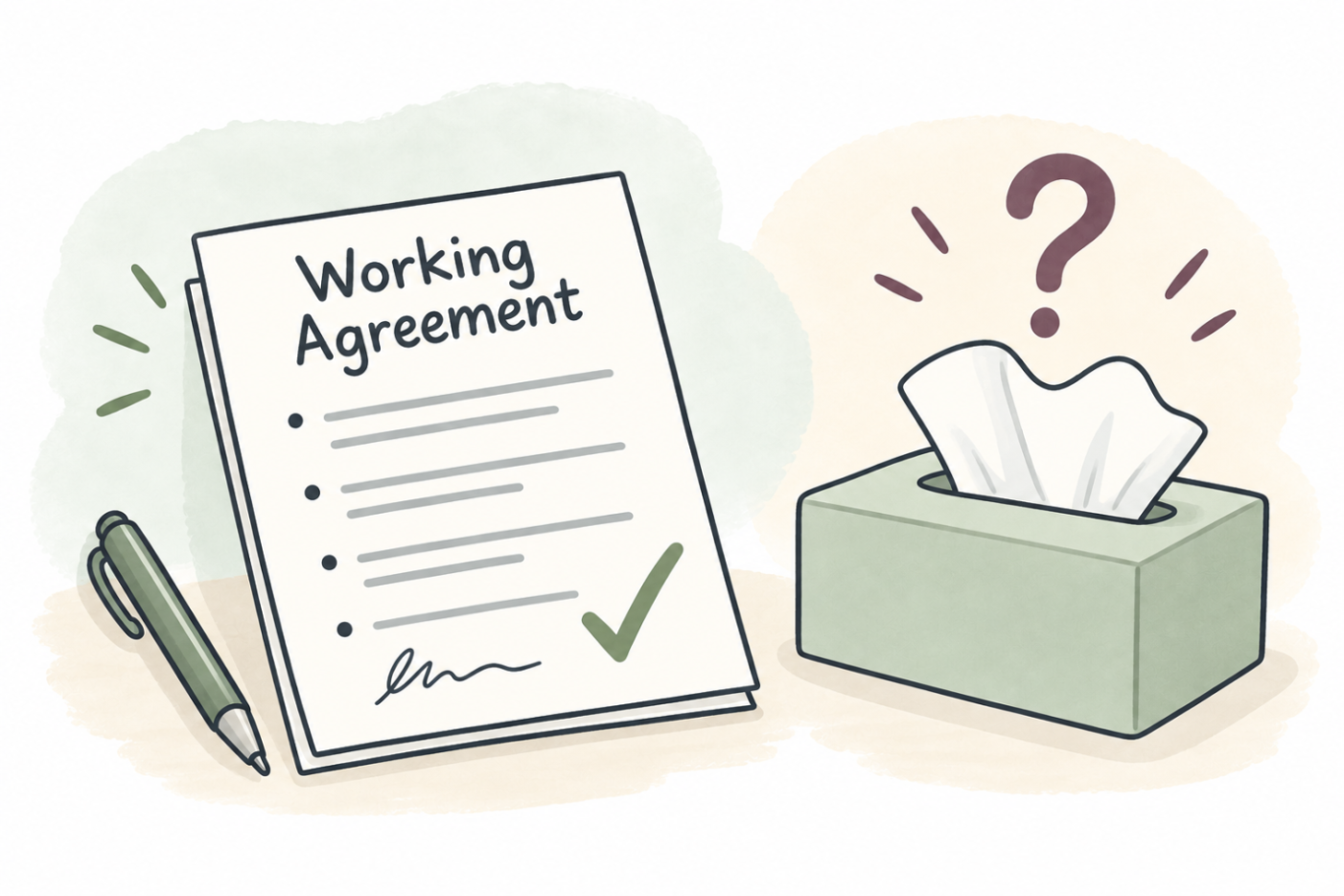
By the time you get to your first session, you should already have been given a contract or working agreement to read and sign.
This will usually cover things such as confidentiality, cancellations, contact between sessions, fees and what happens if either of you needs to end the work.
You may have read it and thought, “Yes, fine,” or you may have had questions once you had time to think about it.
Your first session is a perfectly reasonable place to ask them.
Your counsellor may briefly check that you’re still happy with what you have agreed to and make sure there isn’t anything in the contract that needs clarifying before you begin.
What will we actually talk about?
This is where the counsellor’s way of working can start to make a difference.
With a Person-Centred counsellor, there may be very little pressure to talk about a particular thing. You can bring whatever feels important that day, move between subjects, sit in silence for a while, or simply say that you have no idea where to start.
You can, quite genuinely, talk about anything. Or nothing.
The counsellor is likely to follow your experience rather than decide the agenda for you.
With a more structured approach such as CBT or Solution-Focused Brief Therapy, the counsellor may take a more active role in helping you identify a particular difficulty, issue or goal you want to work on. They may ask more focused questions and bring the conversation back to the area you have agreed to work with.
Other approaches may sit somewhere between those two.
There isn’t a right or wrong way for a first session to look. What matters is that you have some understanding of how your counsellor works and feel able to ask questions if you are unsure about what is happening.
Do I have to talk about difficult things straight away?
No.
Counselling can involve some discomfort, but it should not mean being expected to make a full, immediate disclosure of everything that has happened to you.
Your first session shouldn't feel like an interrogation. You do not have to produce a complete timeline, justify your feelings or hand over every painful detail before the work can begin.
Your counsellor has a responsibility to pay attention to your emotional safety and the pace of the work, rather than pushing you to disclose things before you are ready.
Talking about difficult experiences, emotions or relationships may feel upsetting at times, and that does not necessarily mean something has gone wrong. But the aim is not to push you to the point where you become so overwhelmed that it becomes difficult to think, reflect or stay present in the session.
A good counsellor should notice when something is becoming too much and help you slow things down, ground yourself or move away from the subject for a while.
You can also say:
“I don’t want to talk about that yet.”
“I need to stop.”
“This feels too much.”
at any point.
You may not need to talk directly about some events at all.
Sometimes where you are right now is enough to work with: how an experience is affecting your relationships, your body, your sense of safety, your confidence, your emotions or the way you respond to situations in the present.
You do not have to give a detailed account of everything that has happened for counselling to be useful. Sometimes understanding and working with the impact is enough.
What if I cry?
You might. You might not.
Some people cry in their first session, some cry after several sessions, and some do not cry at all.
There is no expectation that you should cry, and crying is not a sign that you are doing counselling “better” or that something important has only happened if tears appear.
You will generally notice the box of tissues somewhere nearby. Whether you choose to take one is entirely up to you.
You also do not need to worry that your counsellor will be upset by your tears. Crying is a normal part of many counselling sessions, but there is no expectation that it has to happen.
What happens at the end of the session?
Your counsellor is responsible for the clock-watching.
You may notice them glance at the clock or at their watch during the session. That can sometimes feel uncomfortable, you might be worried that you are talking too much, taking up too much space, or that they are bored and waiting for you to stop.
Usually, it is nothing like that.
Your counsellor is keeping an eye on the time so that the session has some shape and you are not suddenly cut off the moment the 50 minutes are up.
They may say something like:
“We’ve got about ten minutes left.”
This gives you both time to begin bringing the session towards an ending.
And that moment can itself become part of the work. Your counsellor may be curious about what it is like for you to hear that the session is coming to an end.
You might feel relieved, disappointed, anxious, frustrated, rushed or something else entirely.
As the session comes to a close, your counsellor may help you slow things down, reflect on what has come up and make sure that, as far as possible, you are leaving in a grounded enough state to go back into the rest of your day.
Boundaries are an important part of counselling.
Ending on time is not the counsellor trying to get rid of you. It is part of respecting the agreement you have made together, including respecting your time as well as theirs.
What about after the session?
It can be important to take a little care of yourself after counselling.
There can be quite a shift between being in a session, where you may have been very focused on yourself and what you are feeling, and then suddenly going back into everyday life: driving home, answering messages, going back to work, picking up the shopping or dealing with whatever comes next.
If you can, give yourself a little bit of space afterwards. That might mean having a drink, going for a short walk, sitting quietly for a few minutes, writing something down, or simply not expecting yourself to immediately switch back into full-speed mode.
You may also notice thoughts or feelings from the session continuing to surface afterwards. That does not necessarily mean anything is wrong. Sometimes your mind is still making sense of what has been talked about.
You do not need to analyse everything before the next session. Sometimes simply noticing what stays with you is enough.
Your first session is just your first session: what next?
You do not have to leave your first counselling session having solved anything, understood everything or knowing for certain whether counselling is right for you.
You may not even know straight away whether this counsellor is right for you.
Part of that will be about how you felt during the session. Did you feel listened to? Did you feel able to be yourself? Did the counsellor’s way of working feel understandable and respectful?
But it can also be about what happens afterwards.
Once you have had some time to think about the session, you may notice that something has started to make a little more sense, that you felt understood in a way you were not expecting, or simply that you feel curious enough to go back and see what happens next.
Sometimes it takes a few sessions to get a proper sense of whether the relationship and the way of working feel right for you.
And sometimes you may come away with an immediate “absolutely not.”
That is useful information too.
Your right to choose matters.
You are not obliged to continue with a counsellor simply because you have had one session with them. You can talk about something that did not feel right, decide to give it a little more time, or decide that you would rather work with someone else.
A good counsellor should be able to respect that choice without making you feel pressured to stay.
Your first session is simply a beginning: a chance to meet the counsellor, get a feel for how they work and start finding out what it might be like to work together.
If this has taken some of the mystery out of what a counselling session might be like, you’re welcome to book a free 20-minute introductory call. It’s a chance to ask any questions, tell me a little about what you’re looking for, and get a sense of whether working together might feel right for you